The Yellow Book
The Yellow Book is a novel without a plot, featuring only one character: a young Parisian who attempts to experience all the passions and modes of thought from every century except his own, embodying the various moods of the world-spirit. The book is written in a curious jewelled style, vivid and obscure, full of argot and archaisms, technical expressions and elaborate paraphrases, characteristic of the French school of Decadents. Its metaphors are as monstrous as orchids and as evil in color, and the life of the senses is described in terms of mystical philosophy, making it difficult to tell whether one is reading the spiritual ecstasies of a mediaeval saint or the morbid confessions of a modern sinner. The heavy odor of incense seems to cling to its pages, troubling the brain, and the mere cadence of its sentences produces a form of revery, a malady of dreaming, in the mind of the reader.
Influence on Dorian Gray
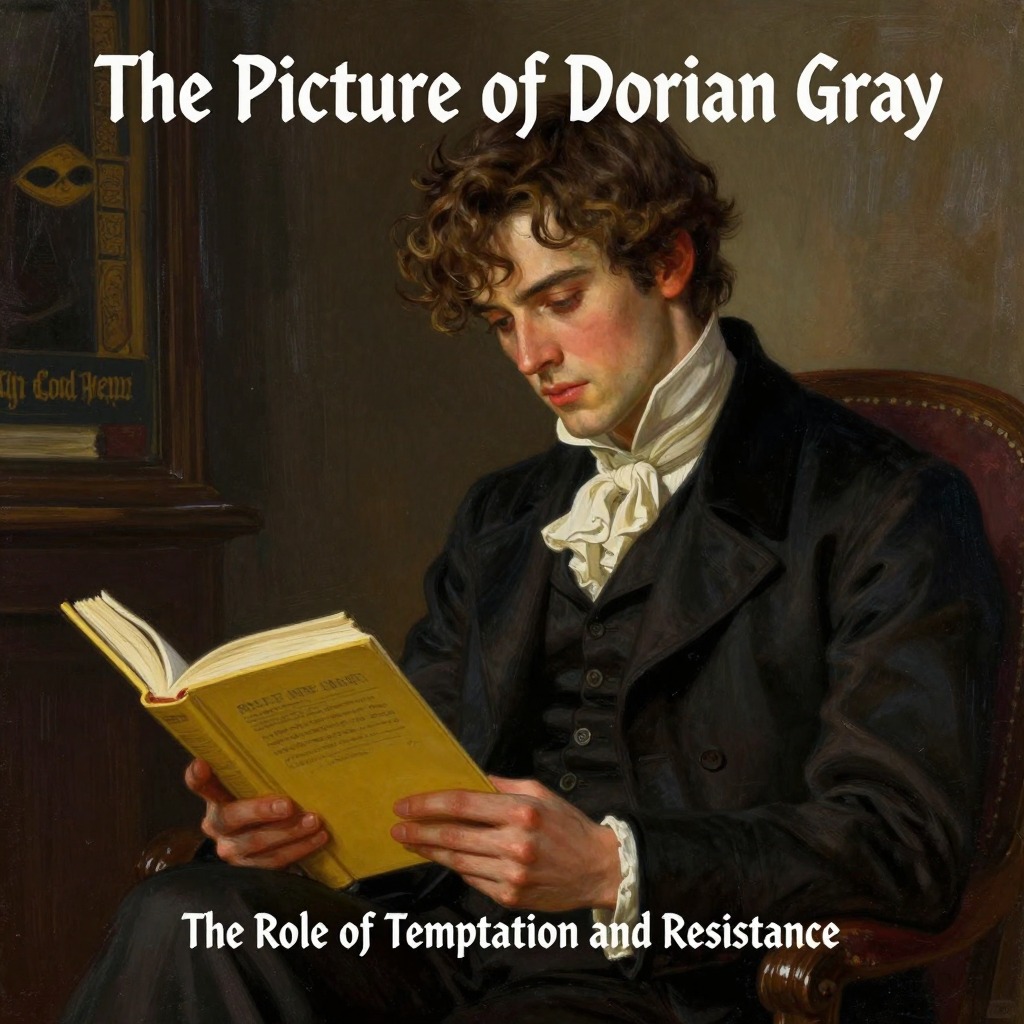
Lord Henry sends the book to Dorian Gray, who becomes so fascinated by it that he forgets the time and arrives late for dinner at the club. For years, Dorian cannot free himself from the memory of the book, and indeed never seeks to do so. He procures from Paris no less than five large-paper copies of the first edition, having them bound in different colors to suit his various moods and the changing fancies of a nature over which he seems, at times, to have almost entirely lost control. The hero of the book becomes a kind of prefiguring type of himself, and the whole book seems to contain the story of his own life, written before he lived it. Dorian reads with an almost cruel joy the latter part of the book, which describes the sorrow and despair of one who has lost his beauty, a fate Dorian himself has no cause to fear.
The Book as a Poison
The book is described as a poisonous book, and Dorian Gray is said to have been poisoned by it. There are moments when he looks on evil simply as a mode through which he can realize his conception of the beautiful. The book's influence is so profound that it shapes his entire worldview, leading him to adopt certain modes of thought that are alien to his nature, abandon himself to their subtle influences, and then leave them with indifference. The hero of the book has a fancy that Dorian himself comes to share: that he has known all the strange, terrible figures of history, that their lives have been his own. The book describes a chapter in which the hero, crowned with laurel, sits as Tiberius in a garden at Capri, carouses as Caligula, wanders as Domitian, and paints his face as Elagabalus. Dorian reads this fantastic chapter over and over again, along with the chapter describing tapestries woven from Gustave Moreau's designs, depicting those whom Vice and Blood and Weariness have made monstrous or mad.
The Book's Role in Dorian's Downfall
The Yellow Book is a central instrument in Dorian's moral and spiritual corruption. It provides him with a philosophy and a model for a life devoted to the pursuit of new sensations, free from conventional morality. The book's influence is so powerful that it becomes a kind of surrogate conscience, guiding him toward ever more extreme experiences. Even when Dorian later attempts to reform, he cannot escape the book's legacy. He tells Lord Henry, "Yet you poisoned me with a book once. I should not forgive that. Harry, promise me that you will never lend that book to any one. It does harm." This acknowledgment underscores the book's role as a catalyst for his descent into a life of sin, crime, and ultimately, self-destruction.